#108 – A-Z Bible Teachers’ Checklist


These “checklists” will be posted from
the PCAF – ICEA staff on an ongoing basis
to help Christian educators with
tips, ideas, and instructions.
 

Stay Close to the Scriptures!

Until I come, give attention to the public
reading of Scripture, to exhortation
and teaching. (I Tim. 4:13)
pexels-photo-267549.jpeg

What to Do:

  • Take time to REALLY look at the scriptures while studying for your lesson and focus on every word and detail (Matt. 5:18). Go over each scripture many times in detail. This can be a slow process, but it can yield greater truths and make your teaching more enriching.
  • If you have taken the time to prepare and study, you must also have the discipline to teach your students what you have learned. (I Tim. 4:14-16).
  • Rarely stray away from the scriptures under study while teaching your lesson (Acts 8:26-35).
  • Never get tied up in unrelated class discussions that take the focus off the lesson under study (I Tim. 1:3-4).
  • You will have opportunities to enlighten your students (with the scriptures) against worldly fads and trends that constantly surface (Eph. 4:14-15).

 

#107 – A-Z Bible Teachers’ Checklist


These “checklists” will be posted from
the PCAF – ICEA staff on an ongoing basis
to help Christian educators with
tips, ideas, and instructions.
 

Hear Words Pronounced
or Play a Game of Biblical
Word Pronunciation
on New Website

And knowledge will
increase
(Daniel 12:4)

pexels-photo-207474.jpeg

What to Do:

Play a game of Bible word pronunciation at www.howtopronounce.com

  1. Display a word on a board or screen.
  2. Ask the class to pronounce the word.
  3. Type in the word on the website’s search box.
  4. Put a microphone near your device (so everyone can hear).
  5. Click the “Pronounce” icon.
  6. Click on your word under the words “Pronounce in English”.
  7. Click the speaker icon to hear the word pronounced.
  8. Have fun!


#105 – A-Z Bible Teachers’ Checklist


These “checklists” will be posted from
the PCAF – ICEA staff on an ongoing basis
to help Christian educators with
tips, ideas, and instructions.
 

Start A Bible
Readers’ Club!

Continually devoting themselves to the
apostles’ teaching and to fellowship, to the
breaking of bread and to prayer
…. (Acts 2:42)

What to Do:

1.   Write out a simple sentence or two explaining each verse of the Bible you will be studying. (One chapter should be enough to study during a session.) Make copies and distribute.

2.   Have students sit at tables and each person at their table will take turns reading their sentence(s) and then read the associated verse(s) from the Bible. Continue this until all members have completed reading the chapter.

3. After the chapter has been read, the assigned group leader will “open the floor” and lead the group discussion by commenting on verses, asking questions, explaining scriptures, and encouraging feedback and comments from the group.

IDEA STARTER!

“Starting a Bible Readers’ Club is a good way of getting members involved in fellowship and studying the Word of God! Our club met once a month, on Sunday afternoons, from 3:00 p.m. – 5:30 p.m. This is not your traditional Bible class. The format is unique and refreshing. There were a number of people, including college students, who studied with us that rarely attended our Sunday morning classes!” Light refreshments were served.


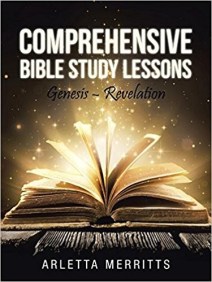
“Comprehensive Bible Study Lessons” by PCAF Author Arletta Merritts


fffBiblical Truths
to Live By

Comprehensive Bible Study Lessons (CBSL) has been written with much passion to promote the importance of reading and understanding the Bible. Reading the Bible can have positive life changing effects when it is read with an open mind. As Christians delve into the mind of God through reading the Bible and become obedient to His commands, preparations are being made for them to partake of the best things in this life and eternal life.

This amazing book is a great companion tool to the Holy Bible and have many benefits. It tests Bible knowledge, encourages self-study, develops a love for the Word of God, and increases understanding.  You can expect the Word of God to teach you, nourish your spirit, and produce life—even eternal life. God has uniquely and magnanimously performed many mighty acts. This phenomenal companion tool to the Holy Bible will help you to see the grandeur of God, His splendor and majesty. It will undoubtedly cause your level faith to increase.

Many people are interested in reading the Bible, but because they don’t understand its content, they stop reading it.  CBSL has been written with simplicity and designed to help casual Bible readers become Bible scholars, thus yielding to the saying, ‘Biblical Truth to Live by.’

Order your copy today:

Comprehensive Bible Study Lessons
Purchase online at
Website: absolutetruthministry.net

This book has approximately 800 pages.
ISBN 978-1-5127-7322-4 — $48.95

Author’s contact information:  513-260-0413
E-mail: arlettamerritts@gmail.com


#104 – A-Z Bible Teachers’ Checklist


These “checklists” will be posted from
the PCAF – ICEA staff on an ongoing basis
to help Christian educators with
tips, ideas, and instructions.
 

Training Class for
Potential Teachers

Encourage one another and build
up one another…. (I Thes. 5:11)

What to Do:

  1. Start out by watching students to see who has potential to become a good teacher
    (I Tim. 5:21-22).
  2. Select your teachers (with your pastor or committee’s approval) and offer a once-a-week training class, held along with your regularly scheduled classes. Maybe during Sunday school.
  3. After weeks or months of training, assign your potential teachers times to teach among themselves (rotating weekly) (II Tim. 2:1-2).
  4. Create a report card and grade the new teachers on skills such as their ability to use scriptures, stay on the lesson, pace themselves, etc.
  5. Occasionally offer additional training for your new teachers in areas where they need help.

IDEA STARTER!

“Our church started a “Potential Teachers” Training Class. This class was offered once before with great success! About 10 students (who had potential to teach) were chosen and trained together in a class setting by the superintendent. After some time, the superintendent allowed students to begin teaching one another, rotating weekly. It became an active class and a number of the students (who became teachers) are now teaching their own adult classes.”