Start A Bible Readers’ Club At Your Church (Handouts)


ICEA – Helping You Start
Your Bible Readers’ Club!

STARTING A BIBLE READERS CLUB IS A UNIQUE WAY FOR
MEMBERS TO LEARN THE BIBLE
& INTERACT AT THE SAME TIME!

HERE IS A SAMPLE LETTER THAT WAS SENT OUT TO MEMBERS:

Praise the Lord ________________________ .
 
I want to invite you to our Bible Readers Club, where members will be reading the book of Philippians. The event will be this Sunday, from 4:15-5:45 p.m. We will have some light-hearted things to do to make the reading exciting. We will be giving out small gifts; have the audience shout out hard to pronounce words; find key verses throughout the chapters, and more!
 
The group will be reading (in rotating order) from the NIV version for better clarity. We plan to continue this study from various books on a monthly basis. For this meeting only, we will allow readers to use their King James Version, also. I have created a curriculum outline to break down and better understand Philippians.
 
We currently have over 50 members signed up! I sure hope they all will attend. Please e-mail me and let me know if you are able to make it.
 
Look forward to seeing you there.
 

(CLICK TEXT BELOW TO SEE HOW IT’S DONE AND SEE
THE ATTACHED FOR A SAMPLE OF THE HANDOUT WE USED.)

Bible Club Philippians (for Blog)

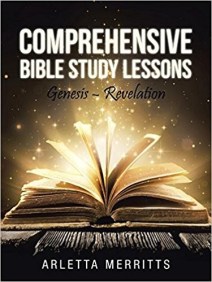
“Comprehensive Bible Study Lessons” by PCAF Author Arletta Merritts


fffBiblical Truths
to Live By

Comprehensive Bible Study Lessons (CBSL) has been written with much passion to promote the importance of reading and understanding the Bible. Reading the Bible can have positive life changing effects when it is read with an open mind. As Christians delve into the mind of God through reading the Bible and become obedient to His commands, preparations are being made for them to partake of the best things in this life and eternal life.

This amazing book is a great companion tool to the Holy Bible and have many benefits. It tests Bible knowledge, encourages self-study, develops a love for the Word of God, and increases understanding.  You can expect the Word of God to teach you, nourish your spirit, and produce life—even eternal life. God has uniquely and magnanimously performed many mighty acts. This phenomenal companion tool to the Holy Bible will help you to see the grandeur of God, His splendor and majesty. It will undoubtedly cause your level faith to increase.

Many people are interested in reading the Bible, but because they don’t understand its content, they stop reading it.  CBSL has been written with simplicity and designed to help casual Bible readers become Bible scholars, thus yielding to the saying, ‘Biblical Truth to Live by.’

Order your copy today:

Comprehensive Bible Study Lessons
Purchase online at
Website: absolutetruthministry.net

This book has approximately 800 pages.
ISBN 978-1-5127-7322-4 — $48.95

Author’s contact information:  513-260-0413
E-mail: arlettamerritts@gmail.com


Attempting to Define Hope Versus Faith


pexels-photo-311391.jpeg

ICEA – “Church at Study”

The word “hope” is often associated with a person’s expectation of God’s final deliverance or salvation. In the Old Testament, God was the object of the righteous. They waited for His salvation. Many of the Old Testament saints also hoped for the final deliverer (Messiah), who would establish His kingdom on earth. We, (the church), look (or hope) for Him, also. He is the risen One: the “first-born” from the dead, and our hope is that we will (like He did) rise; and we will meet the Lord in the air. Hope, in large part (for the church) has to do with our trust that God will one day physically deliver the righteous from earth to heaven. It is a hope in a final deliverance or resurrection. New Testament scriptures are mainly used IN THE HANDOUT BELOW, to attempt to define the word hope. The object of hope in a number of the scriptures from the handout refer to either God the Father, or the Lord Jesus Christ. Hope, therefore, is often in expectation of the Person, Jesus, who God has made both Lord and Christ (Messiah). Hope (not always, but in large part) speaks of something more eternal than faith. This means, for example, that the word “hope” is rarely defined as someone believing that God will heal them of a condition. Faith, many times, is a word better used for our belief in “temporal” healings and believing God for His temporal “blessings.” Our faith in temporal things can waiver. For example…let’s say someone had faith to believe God to “fix” some condition. Years went by and the condition remained. Over those years, they had highs and lows. There were times they believed God with great faith and other times doubts crept in. The point is, again, our faith often waivers and we can become of “little faith” (Matt. 8:26). Here is another example: we have faith that God will heal a sick loved one. They die. We question why. What went wrong? Did we have enough faith? We often wrestle with our inability to have faith in God for temporal healings. But, we should never lose HOPE in the person of Jesus; the One who controls death and life. That’s why we are at peace when we have prayed and had faith that God would heal a loved one…only to watch them pass away. It does not take away from…nor diminish…our hope in the existence of the person of Christ or God. Faith waivers, but hope in God should never waiver. Examine this scripture: “Lord, I believe [in order words, I have faith], but help my unbelief.” We see from the verse that this man’s faith waivered, but not his hope in the existence of God. It is possible to have little faith to believe for something and yet have hope in the Eternal One. Here is how Hebrews 6:18-20 reads: That by two immutable things, in which it was impossible for God to lie, we might have a strong consolation, who have fled for refuge to lay hold upon the HOPE set before us: Which HOPE we have as an ANCHOR OF THE SOUL, both sure and stedfast, and which entereth into that within the veil; Whither the forerunner is for us entered, even Jesus…. This verse reminds us that hope is more eternal. (This doesn’t mean that the word hope is in all instances defined as eternal, neither is faith always considered temporal.) The hope we have in Jesus should never waiver, because the hope we have in the person of Jesus ANCHORS our souls and hope is not volatile like our faith can be. We can sometimes lose our faith, but we must not ever lose our hope. We see an instance where the disciple Peter and the other disciples lost their HOPE. The angels told the women that Christ was risen, the bible states that the men did not believe them. In other words, the Son of God had died, and their was no HOPE in His resurrection. This would have been the saddest occurrence in the bible had Jesus not have shown Himself alive to his hopeless followers. Explore the handout below to view scriptures explaining the difference between faith and hope.

Please click on the text below to view typed
out scriptures, noting the difference
between faith and hope:

Church at Study – Faith Compared to Hope
Teaching on Anxiety


– Teaching On Anxiety –

5 Trust in the LORD with all your heart And do not
lean on your own understanding.
(Proverbs 3:5)

3 The steadfast of mind You will keep in perfect
peace, Because he trusts in You.
(Isaiah 26:3)

34 So do not worry about tomorrow; for tomorrow
will care for itself. Each day has enough trouble of its own.
(Matthew 6:34)

13 No temptation has overtaken you but such as is common
to man; and God is faithful, who will not allow you to be tempted
beyond what you are able, but with the temptation will provide
the way of escape also, so that you will be able to endure it.
(I Corinthians 10:13)

6 Be anxious for nothing, but in everything by prayer and
supplication with thanksgiving let your requests be made
known to God. 7 And the peace of God, which
surpasses all comprehension, will guard your
hearts and your minds in Christ Jesus.
(Philippians 4:6-7)

6 Humble yourselves therefore under the mighty
hand of God, that he may exalt you in due time:
7 Casting all your care upon him; for he careth for you.
(I Peter 5:6-7)

#104 – A-Z Bible Teachers’ Checklist


These “checklists” will be posted from
the PCAF – ICEA staff on an ongoing basis
to help Christian educators with
tips, ideas, and instructions.
 

Training Class for
Potential Teachers

Encourage one another and build
up one another…. (I Thes. 5:11)

What to Do:

  1. Start out by watching students to see who has potential to become a good teacher
    (I Tim. 5:21-22).
  2. Select your teachers (with your pastor or committee’s approval) and offer a once-a-week training class, held along with your regularly scheduled classes. Maybe during Sunday school.
  3. After weeks or months of training, assign your potential teachers times to teach among themselves (rotating weekly) (II Tim. 2:1-2).
  4. Create a report card and grade the new teachers on skills such as their ability to use scriptures, stay on the lesson, pace themselves, etc.
  5. Occasionally offer additional training for your new teachers in areas where they need help.

IDEA STARTER!

“Our church started a “Potential Teachers” Training Class. This class was offered once before with great success! About 10 students (who had potential to teach) were chosen and trained together in a class setting by the superintendent. After some time, the superintendent allowed students to begin teaching one another, rotating weekly. It became an active class and a number of the students (who became teachers) are now teaching their own adult classes.”